
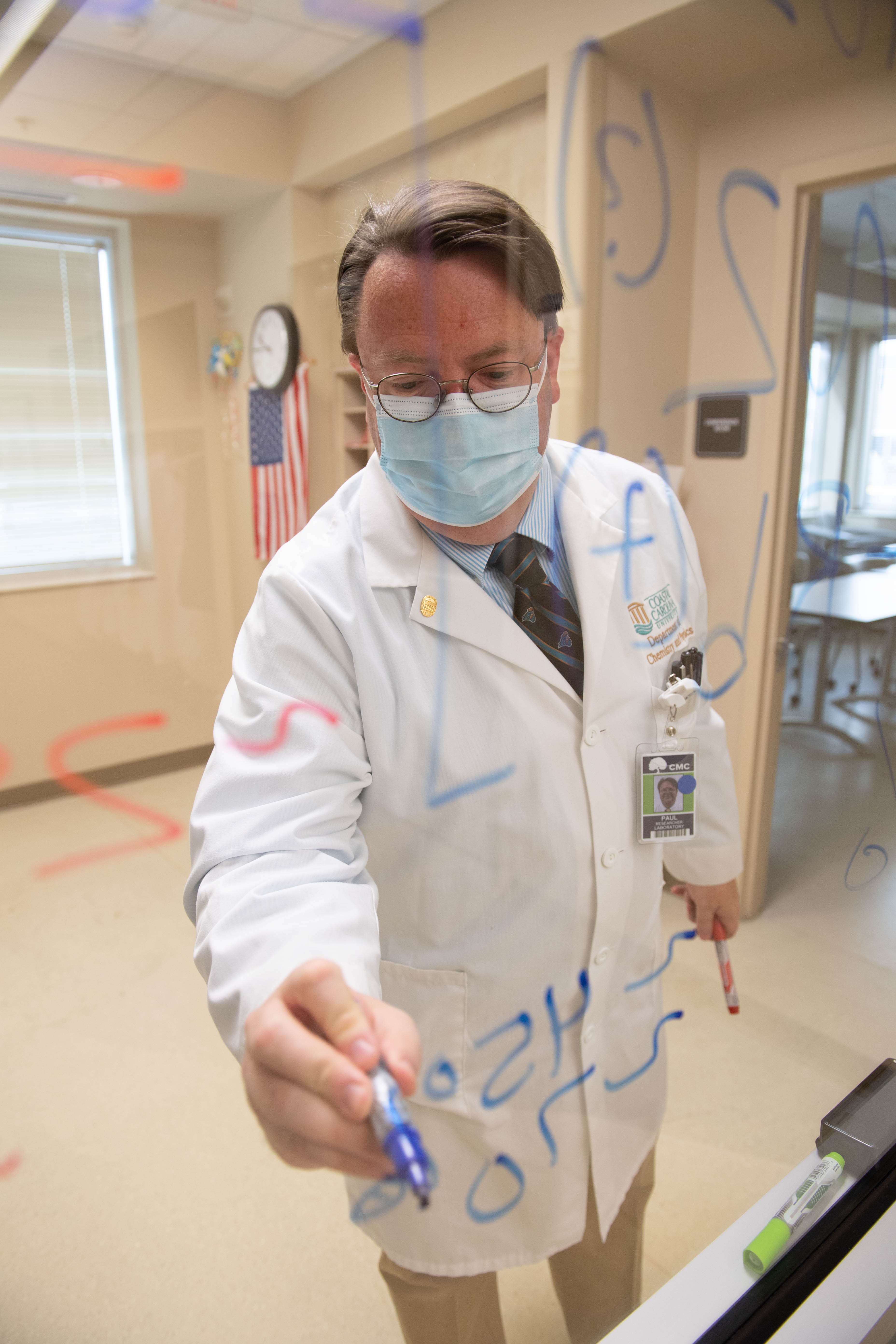
Raised in the idyllic state of Maine, Dr. Paul E. Richardson’s exceptional journey began with early groundbreaking achievements that would foreshadow a distinguished career in biochemistry. As a young student, he made waves by winning two state science fair awards—one for his pioneering research on characterizing bacteria through magnetic fields, and another for his innovative application of household food products to treat bacterial infections. These early contributions set the stage for a career marked by scientific ingenuity and an unyielding passion for discovery.
Dr. Richardson earned a prestigious Vickroy Scholarship to attend Lebanon Valley College, where he not only obtained a degree in Biochemistry in 1996 but also laid the foundation for future research excellence. After his undergraduate studies, he joined Bayer Pharmaceuticals’ Quality Control division, where he honed his expertise by testing over-the-counter drugs such as Aspirin and Midol. His scientific ambition propelled him to the University of Southern Maine, where he earned a master’s degree in Medical Immunology and Molecular Biology in 1999, receiving the Outstanding Graduate Student Award for his master’s thesis on apoptotic factors in herpesviruses—a contribution that earned him recognition in the field of virology.
His academic and research pursuits culminated in a Ph.D. in Biochemistry and Molecular Genetics from the University of Alabama at Birmingham in 2004, where he conducted trailblazing research on molecular modeling of disease-related proteins. This research not only advanced our understanding of protein structures but also laid a foundation for novel therapeutic interventions in various diseases.
Dr. Richardson’s appointment to the faculty at Coastal Carolina University in 2004 marked the beginning of a transformative chapter in both his career and the institution’s scientific landscape. His meteoric rise to Associate Professor in 2009 was accompanied by the prestigious title of Outstanding Alumni Researcher in Applied Medical Sciences. In 2012, he was awarded the Harry M. Lightsey Jr. Visiting Scholar Award, a testament to his impactful contributions to biomedical research.
Elevated to the rank of Full Professor of Biochemistry in 2016, Dr. Richardson took on the mantle of leadership as Principal Investigator for Coastal Carolina University’s INBRE program from 2016-2020, steering cutting-edge research initiatives and serving on the South Carolina INBRE Steering Committee. His leadership extended further when he became Chair of the Department of Chemistry in 2020. During this critical period, Dr. Richardson emerged as a scientific and administrative beacon, playing an instrumental role in safeguarding the university during the COVID-19 pandemic. His expertise in molecular detection was pivotal in the development of campus-wide testing protocols, earning him co-recognition for the University Service Award in 2022. In 2023, he was honored as the HTC Distinguished Teacher-Scholar, cementing his legacy as an educator of unparalleled impact. This past year Dr Richardson was recognized with the Governor’s award for outstanding research at a predominately undergraduate university
Dr. Richardson’s current research focuses on the frontier of disease detection, employing genetic-based approaches to identify infectious agents in both environmental and biological samples. A champion of undergraduate research, he has mentored over 92 students, resulting in 87 student poster presentations, 15 student oral presentations, student-led research publications, and 4 additional publications. His dedication to fostering the next generation of scientific leaders is reflected not only in these achievements but also in the $2.3 million in research grants he has secured to advance student-driven inquiry.
In addition to his scientific contributions, Dr. Richardson is an avid disc golfer, fisherman, and poker player, embodying a dynamic blend of intellectual rigor and personal passion. With a career spanning nearly two decades at Coastal Carolina University, his contributions to science, education, and public health continue to resonate, marking him as a leader whose work has had a lasting impact on both academia and society.
 Dr. Paul E. Richardson